

IRO supplies high-precision tufting machinery parts and gauge parts for textile applications, including hook modules, looper modules, needle modules, reed modules, knives, knife blocks and semi modular solutions. Our components are designed for accuracy, durability and consistent performance in carpet, rug, artificial grass and technical textile production.
Tufting Process
The process of tufting, which enables simple rugs or bedspreads to be made by pushing pile yarns through a coarsely woven or non woven backing cloth, has been known for hundreds of years in many corners of the world. However, 1950 the Cobble brothers develop the first tufting machine which was capable of producing broadloom carpet - a technique which has been refined over the years, making it the most important method of carpet production in the world today.
A tufting machine operates similarly to a line of hundreds of sewing needles, each supplied with its own yarn. As the backing material—typically a woven or non-woven fabric—moves through the machine, the needles insert yarn into the backing at high speed.
As the needles retract, loopers catch and hold the yarn to form loops on the surface. If knives are applied, these loops are cut to create a cut pile finish. This continuous and precise operation enables fast, efficient, and consistent production of high-quality textile surfaces.
Key Components in the Tufting Process
The performance and quality of the tufting process depend on several critical components:
Needles – Insert yarn into the backing material
Loopers – Control and hold the yarn to form loops
Hooks – Capture, hold, and form the yarn loops
Knives – Cut loops to create cut pile structures
Reed fingers – Support and guide the backing material
Modules (needle, looper, hook, reed) – Ensure precision and alignment
High-quality gauge parts are essential to maintain accuracy, reduce wear, and ensure consistent fabric quality throughout the production process.
At IRO Gauge parts, we specialize in high-precision gauge for tufting machines, modules including needles, loopers, knives, reed fingers and semi module. Our components are engineered to ensure optimal performance, long service life, and consistent fabric quality in every stage of the tufting process.
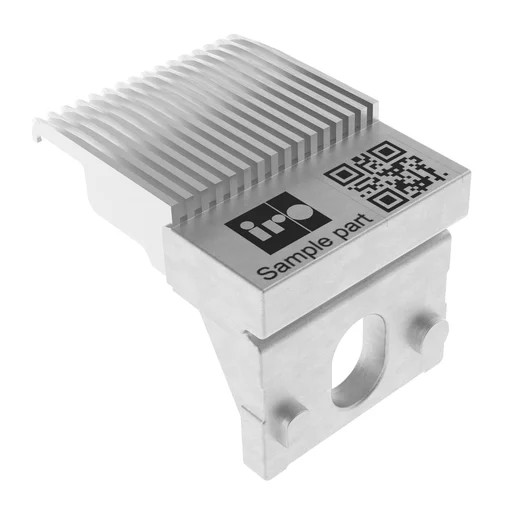
A hook module is a critical precision component used in tufting machines for carpet, rugs, and artificial grass.
Its function is to capture, hold, and form the yarn loops created when the needle inserts yarn through the primary backing fabric.
Together with the needle, the hook module ensures correct cut pile formation and proper yarn binding.
Main Function
The primary function of the hook module is to:
Receive the yarn loop from the needle
Hold the yarn in the correct position during cutting
Enable precise cutting
Types: Available in various gauges to determine the density and pile height of the carpet.
Configuration: Straight, Staggered
Gauge: 1/10, 1/4, 1/7, 1/8, 3/16, 5/32, 5/64
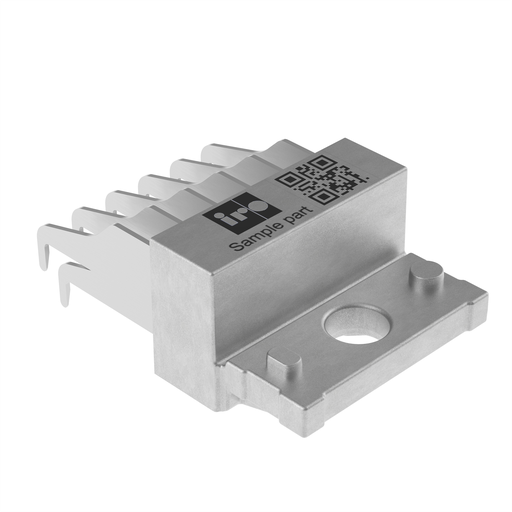
Main Function
The primary function of the looper module is to:
Capture and remove the yarn loop from the needle
Hold the yarn securely as the needle retracts
Form and stabilize the loop’s shape, height, and position
Enable consistent loop formation at high operating speeds
Loopers are available as modules, with various fixing systems and gauge configurations. All designs are engineered to ensure optimal interaction with the needle and reliable performance under high-speed production conditions.
Configuration: Straight, Staggered
Gauge: 1/10, 1/12, 1/16, 1/2, 1/4, 1/5, 1/8, 5/16, 5/32, 5/64
A needle module is a primary component in a tufting machine, responsible for inserting yarn through the primary backing to initiate the formation of yarn loops.
Working in coordination with the hook or looper module, the needle module is essential for accurate loop formation, stitch quality, and overall machine productivity.
Main Function
The primary function of the needle module is to:
Carry and position a set of needles at the correct spacing (pitch)
Move the yarn up and down through the backing at high speed
Ensure precise needle positioning, rake angle, and tip alignment in relation to the hook or looper.
Type: The needle modules are available in varoius gauges.
Configuration: Straight, Staggered eller DSNB
Gauge 1/10, 1/12. 1/16, 1/4, 1/5, 1/8, 3/16, 5/16, 5/32, 5/64
A reed module is a component in a tufting machine designed to guide, separate, and support the primary backing and yarn throughout the tufting process.
Its main role is to maintain structure and alignment within the tufting zone, ensuring stable conditions for accurate interaction between needles, hooks, and loopers.
Unlike active components involved in loop formation, the reed module functions as a stabilizing and guiding element, ensuring precision and repeatability during high-speed production.
Main Function
The primary function of the reed module is to:
Define channels and spacing between needles (gauge control)
Guide and support the primary backing as needles move up and down
Reduce unwanted movement and vibration in the backing material
Ensure precise yarn and needle passage without interference with other components
Configuration: Straight, Straight Double pitch, Staggered Y, Staggered I & Y
Gauge: 1/10, 1/12, 1/4, 1/5, 1/7, 1/8, 3/16, 5/16, 5/32, 5/64, 9/64
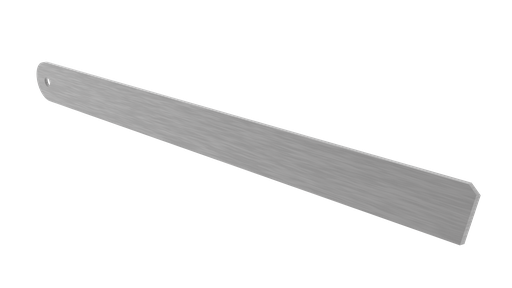
A knife in a tufting machine is used in cut pile applications and is responsible for cutting the yarn loop formed when the yarn is held by a hook.
Working in very close coordination with the hook, the knife is critical for achieving a clean cut, uniform pile height, and high-quality finished carpet. Its precision directly impacts the appearance and consistency of the final product.
The knife operates in direct contact with the hook at very high speeds—often up to approximately 2000 rpm.
This places extremely high demands on:
Cutting geometry and sharpness
Precise alignment and adjustment
Together with the hook, the knife ensures reliable cutting performance, consistent pile structure, and efficient high-speed production.
IRO offers standard knives manufactured from hardened steel, intentionally designed to act as the primary wear component, as they are more cost-effective and easier to replace than hooks.
Thickness: 0,64 – 1,19
Rake angle: 12° - 17°
Cutting angle: 20° - 23°
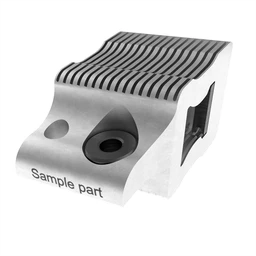
The knife block is a central component in tufting machines used for cut pile production, serving as the mechanical holder and guiding system for the knives that cut the yarn loops in coordination with the hook.
A well-engineered knife block is essential for stable machine operation, high cutting precision, and a uniform final carpet appearance. IRO knife blocks are designed to ensure that all knives are maintained in exact position, with correct parallelism, cutting angle, and stability across the entire working width.
By maintaining precise alignment, IRO knife blocks enable clean and repeatable cuts at high operating speeds while minimizing the risk of yarn damage, uneven pile height, or premature wear of surrounding components.
Gauge: 1/10, 1/5, 1/7, 1/8, 3/16, 5/16, 5/32, 5/64, 9/64
Clamp: Shoe or plate
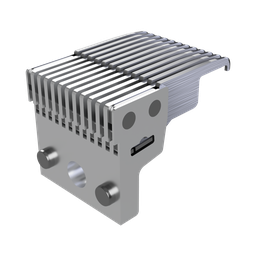
A semi modular complete module is a fully assembled hook module for tufting machines, where the hooks are individually replaceable while securely mounted within a shared module body.
This design combines the advantages of a traditional module—such as stability and precise positioning—with the flexibility of a single system, enabling efficient maintenance and long-term performance.
IRO semi modular is engineered to deliver high process stability while allowing selective replacement of wear parts, reducing overall lifecycle costs.
With our semi-modular solution, you get the best of both worlds—the stability of a traditional module and the flexibility of a single system. Individual hooks can be replaced as they wear, without affecting the geometry or requiring the entire module to be scrapped. This results in lower lifecycle costs, higher process stability, and reduced downtime.
Main Function
The primary function of the semi modular:
Capture and hold yarn loops in coordination with the needle module
Enable cut pile production in combination with knife systems
Ensure correct pitch, hook tip position, and parallelism across the module
Allow replacement of individual hooks without discarding the entire module
Configuration: Straight, Staggered
Gauge: 1/10, 1/8, 5/32
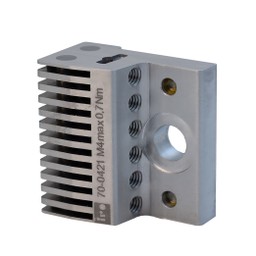
A semi modular body is the structural housing in a semi modular hook solution for tufting machines. It serves as the load-bearing and geometrically controlling component in which semi modular hooks are mounted and secured to form a complete functional unit.
The semi modular body forms the foundation of a semi modular complete module, ensuring long-term stability and precise alignment within the tufting system.
IRO semi modular bodies are engineered for high dimensional accuracy and durability, supporting both stable production and efficient maintenance.